


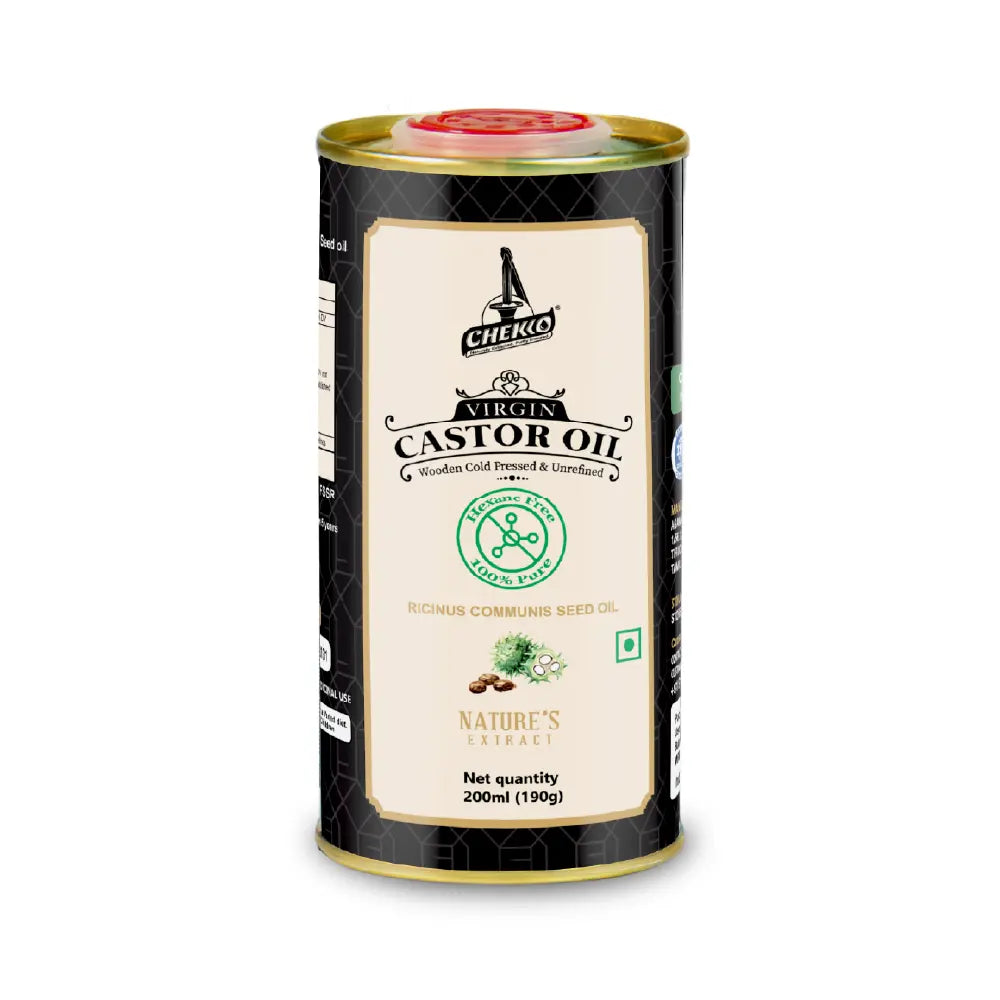
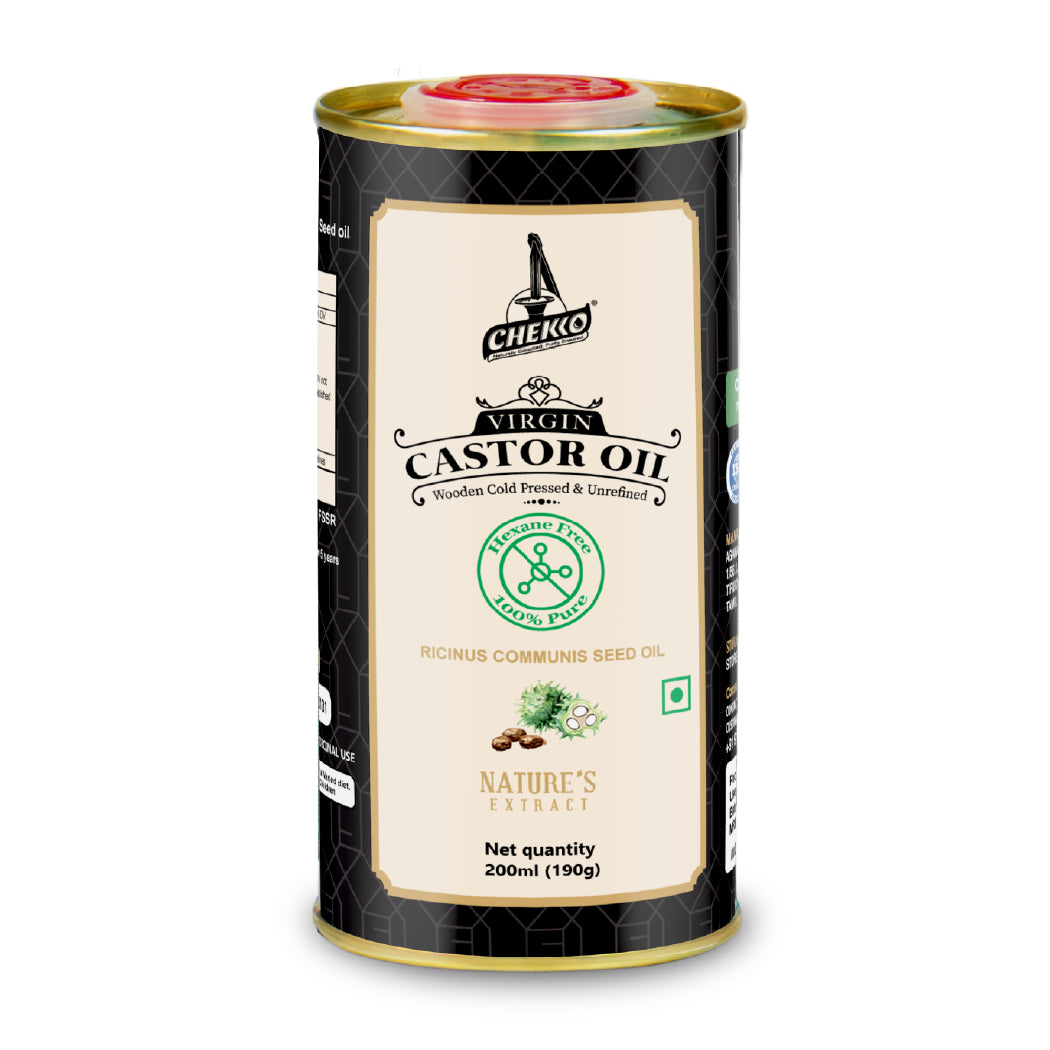
Chekko Cold Pressed Castor Oil – 100% Pure, Natural & Hexane-free
Rated 5 star by our customers
- Regular price
-
₹199.00 - Regular price
-
₹230.00 - Sale price
-
₹199.00
Couldn't load pickup availability
Best Before: 01-03-2027
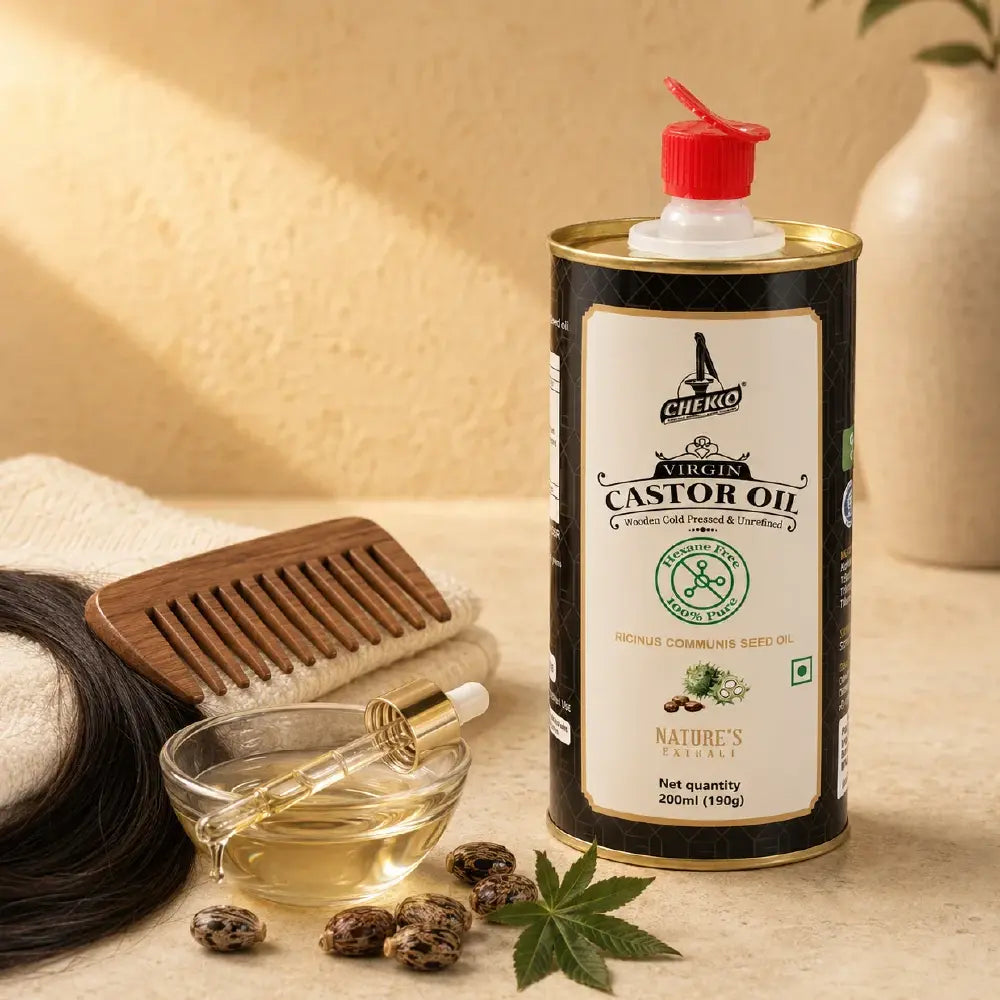
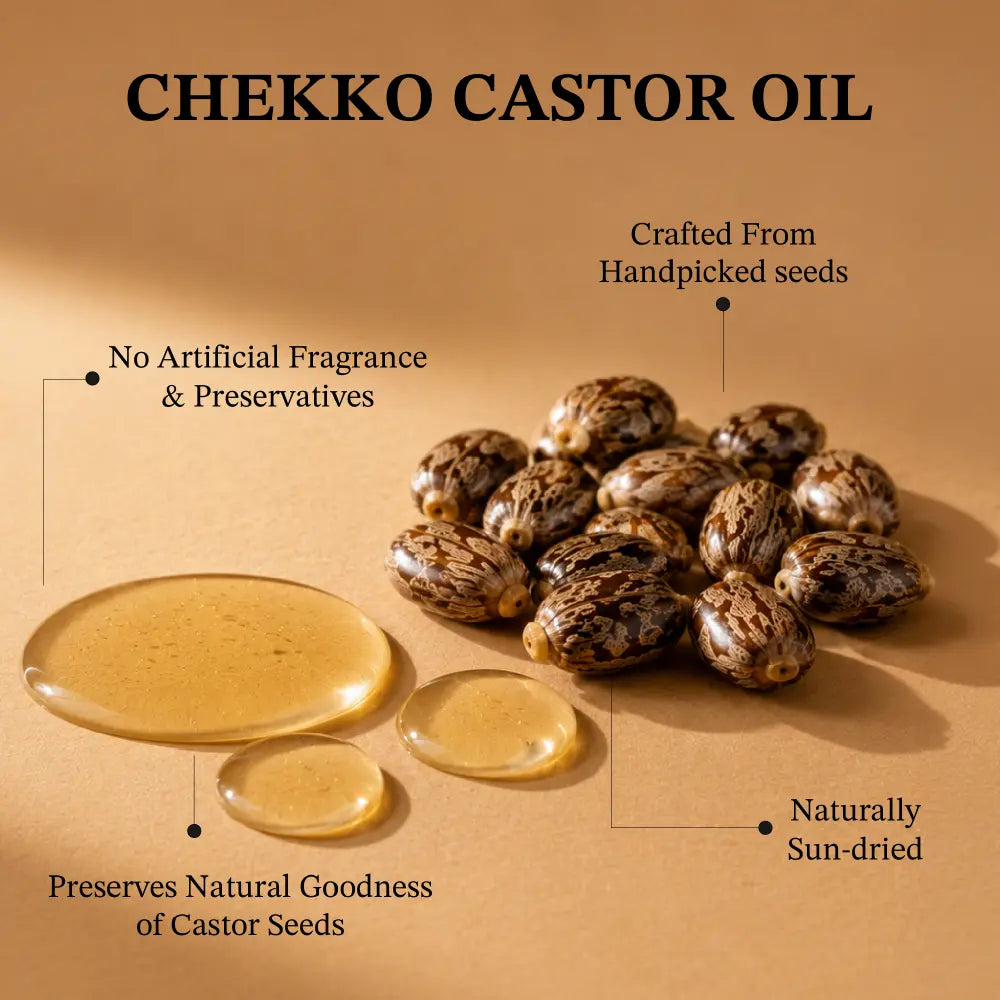
Chekko Cold Pressed Castor Oil is extracted from premium castor seeds using the traditional wood-pressed method to preserve natural nutrients and thickness.
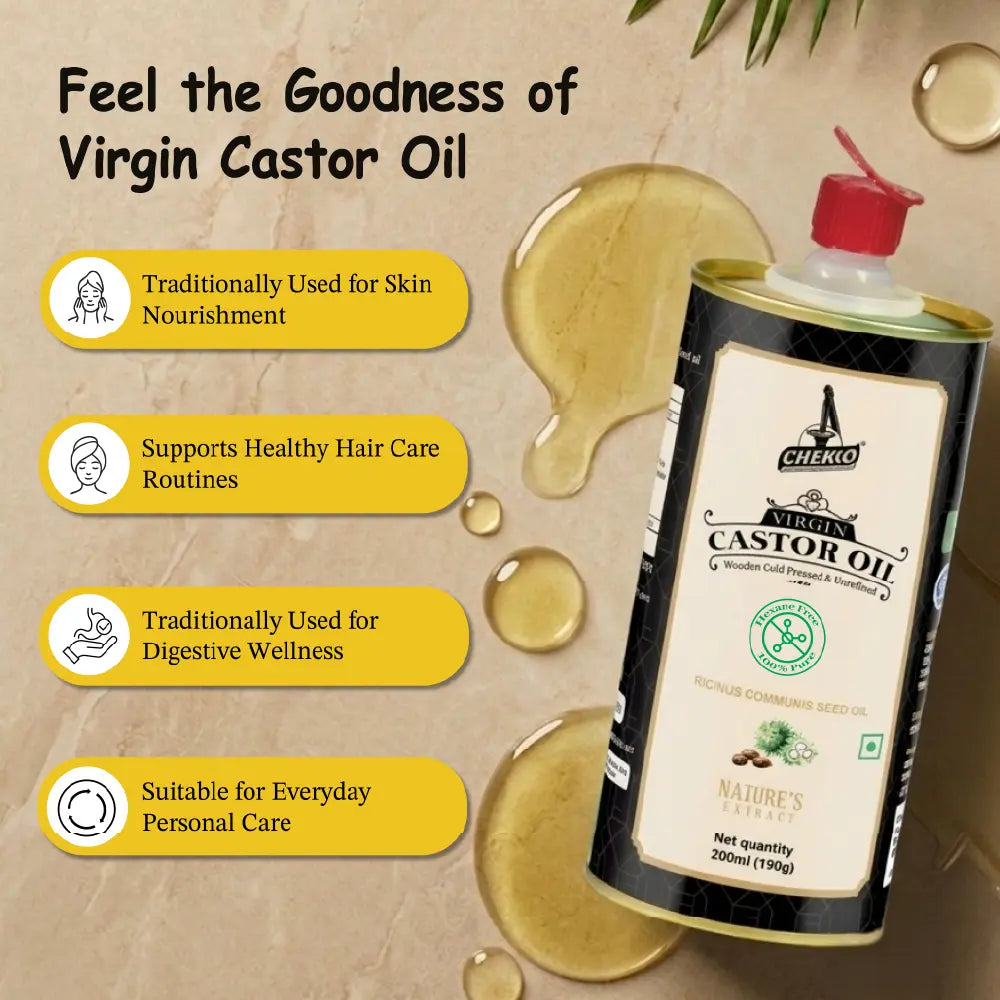
This pure, unrefined, and multipurpose castor oil is ideal for hair care, skin care, eyebrow and eyelash grooming, massage, and traditional wellness applications. Known for its rich texture and deep nourishment, Chekko Castor Oil/Cold Pressed Oil delivers authentic purity and premium quality.
Castor Oil Benefits for Hair
Chekko Cold Pressed Castor Oil is one of the most popular natural oils for hair care. Rich in ricinoleic acid, it deeply nourishes hair follicles and strengthens roots for thick, healthy-looking hair.
- Nourishes hair and supports overall hair health
- Traditionally used for fuller-looking eyebrows and eyelashes
- Deeply conditions dry and damaged hair
- Nourishes the scalp naturally
- Adds natural shine and softness to hair
Castor Oil Benefits for Skin
Castor oil is a powerful natural moisturiser packed with fatty acids that deeply hydrate skin.
- Deeply moisturises dry and cracked skin
- Leaves skin looking smooth and even-toned
- Leaves skin feeling soft and calm
- Natural care for dry lips and cuticles
- Used in traditional Ayurvedic massage
How to Use
Apply directly on scalp and massage gently as part of your hair care routine. Use on eyebrows and eyelashes daily before bed as part of your beauty routine. Apply on skin as a natural moisturiser. Mix with coconut oil for a lighter hair mask.
Storage Instructions
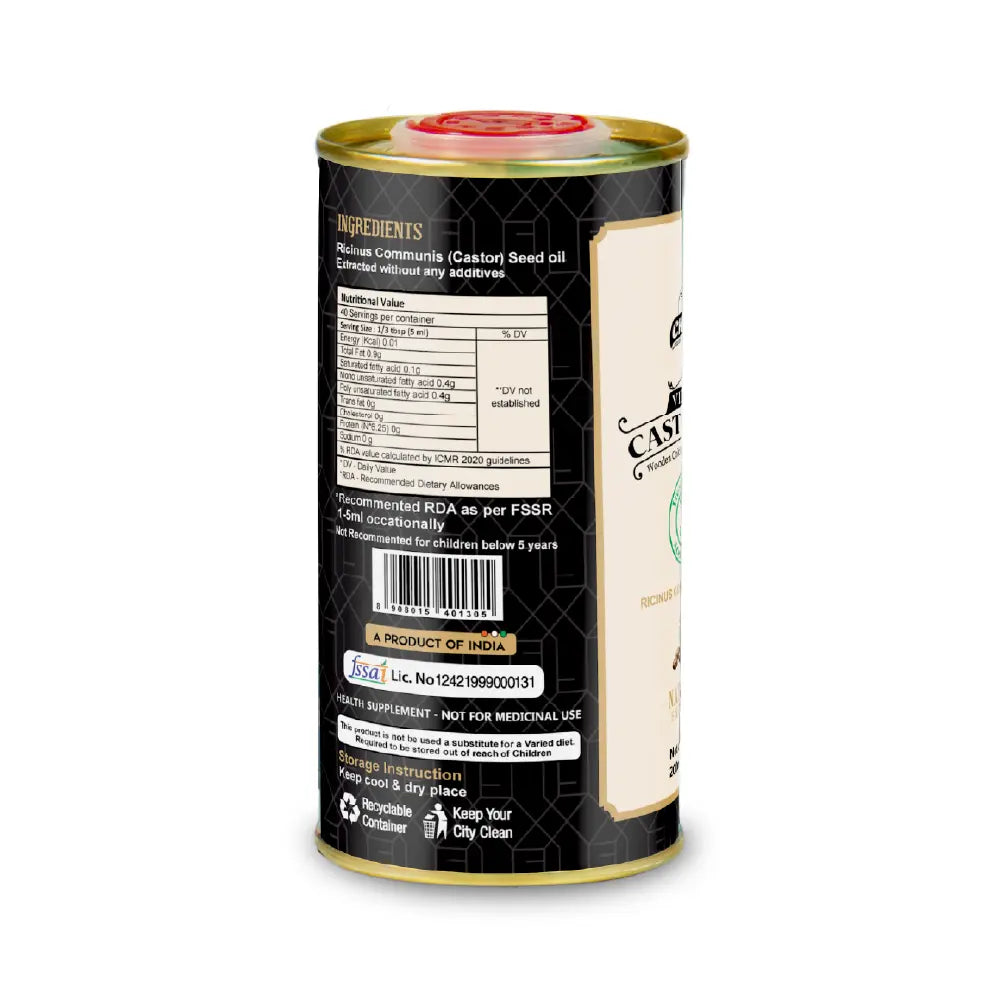
Store in a cool, dry place. Best consumed within 1 year of opening.
Certifications
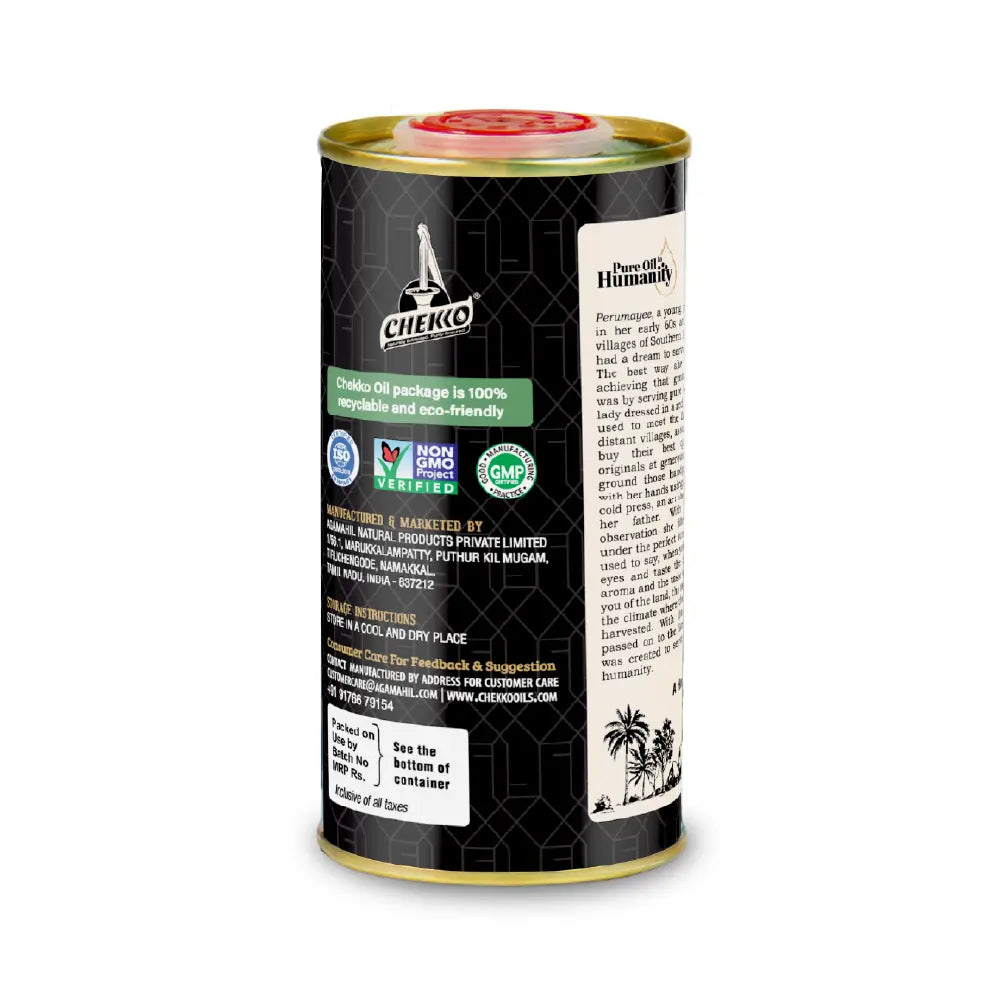
ISO 22000 | GMP | HACCP | FSSAI | Non-GMO Verified
About Chekko
Chekko is a brand by Agamahil Natural — committed to reviving India's ancient oil extraction traditions. Pure, natural, and chemical-free in every drop.
Uses & Benefits
Why Chekko Cold Pressed Unrefined





Designed for Clean, Effortless Pouring
A thoughtful tin detail that makes everyday use cleaner, easier, and more controlled.


Everything You Want to Know
About CHEKKO Cold Pressed Virgin Castor Oil